
Whose Voices Get Heard
Power, Privilege, and Feminism's Roots
What does Sojourner Truth’s question—“Ain’t I a woman?”—still teach us today about power, privilege, and who gets to lead movements for change?
Last week we explored how power and privilege shape our everyday lives. This week, I want us to go deeper: how have gender and race historically intersected within movements for equity?
Ain’t I A Woman?
When I was about 10, I read Sojourner Truth’s powerful address to the 1851 Women’s Rights Convention in Akron, Ohio. That speech—“Ain’t I a Woman?”—was my first glimpse that movements for equality weren’t always rooted in true equality.
To understand its impact, we need to look at the women’s rights movement of the time. The movement was still young—the Seneca Falls Convention had just taken place in 1848—but racism was embedded from the start.
Elizabeth Cady Stanton, a key figure in early feminism, rejected abolitionists who pushed for Black suffrage. She also advocated for educational requirements to vote. Both actions disenfranchised all Black people—especially Black women. Simply put: Black women were not socially considered “real women,” and therefore were unwelcome in spaces meant for women.
That’s why Sojourner Truth’s words hit so hard. She declared:
“Nobody ever helps me into carriages, or over mud-puddles… And ain’t I a woman? Look at my arm! I have ploughed and planted, and no man could head me!”
Her speech exposed the hypocrisy of a movement that claimed to fight for women’s rights while leaving Black women behind.
If you want to learn more about how Black women resisted this exclusion, I highly recommend Ida B. the Queen: The Extraordinary Life and Legacy of Ida B. Wells by Michelle Duster.
Fast forward more than a century, and we still see the same pattern. Did you know the #MeToo movement was started by Tarana Burke, a Black woman, in 2007? Yet it didn’t gain national attention until 2017—when Alyssa Milano, a white actress, used the hashtag on Twitter.
My intent is not to shame Milano—I’m grateful she spoke out. But I’m also angry that it took a white woman’s voice for the world to pay attention. If we had listened to Black women, this conversation could have started nearly a decade earlier.
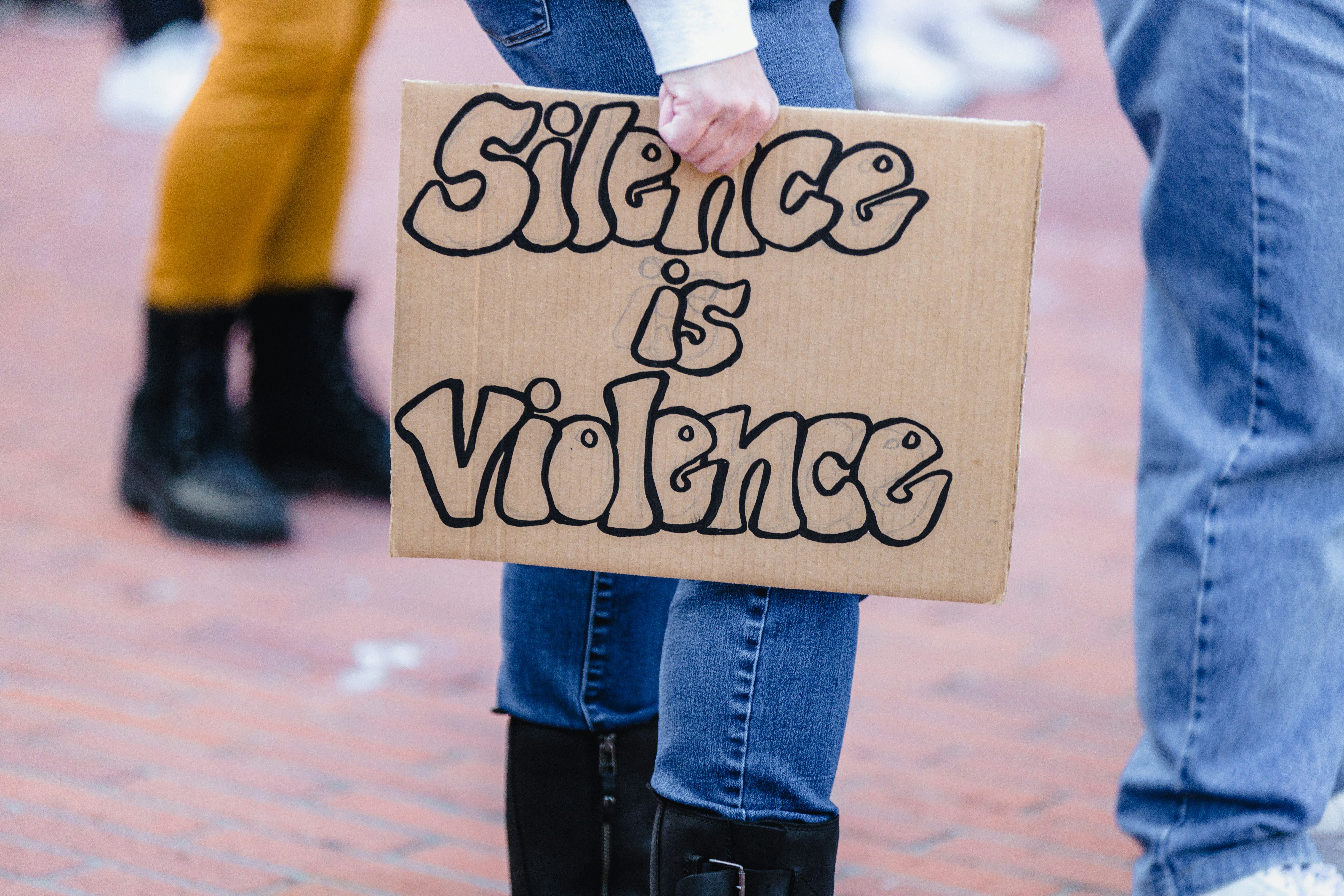
Power, Privilege, and Whose Voices Count
This erasure isn’t limited to social movements. It happens in tech, too. Consider Arwa Mboya, an MIT UX developer and researcher from 2018 to 2020. She discovered that Jeffrey Epstein—a convicted sex offender—was a major donor to the MIT Media Lab.
In 2019, she wrote a powerful piece calling for the resignation of Joi Ito, the Lab’s director. And what happened? Her concerns were dismissed. When journalist Ronan Farrow reported the same story, Ito resigned.
Bridget Todd highlights this in her podcast There Are No Girls on the Internet, one of my absolute favorites. If you’re not listening yet, you should.

As we’re closing out this week’s module, I have a few things I’m hoping you’ll think about.
💭How do you show up in these spaces? Are you questioning how you’re showing up or do you have a “take me as I am” attitude?
❓ Do you have any questions that you want me to address during my Substack Live on September 23, 2025?
✨If you want to have space to discuss this week’s module in a private chat, please upgrade to a paid subscription.
References
Burke, T. (2007). Me Too movement. Retrieved from https://metoomvmt.org
Duster, M. (2021). Ida B. the queen: The extraordinary life and legacy of Ida B. Wells. Atria/One Signal Publishers.
Farrow, R. (2019, September 6). Jeffrey Epstein’s billions and the MIT Media Lab. The New Yorker. Retrieved from https://www.newyorker.com
Milano, A. [@Alyssa_Milano]. (2017, October 15). Twitter. https://twitter.com/Alyssa_Milano/status/919659438700670976
Todd, B. (Host). (2020–present). There are no girls on the internet [Audio podcast]. iHeartRadio. https://www.tangoti.com/
Truth, S. (1851, May). Ain’t I a woman? Speech presented at the Women’s Rights Convention, Akron, OH. Retrieved from https://www.nps.gov/articles/sojourner-truth.htm
Wonderfully written and powerful ideas for us all to consider. The way I see it, women's voices are still being rejected in subtle ways and sometime in very overt and obvious ways. We have a long way to go and I believe this to be true in terms of racism as well.